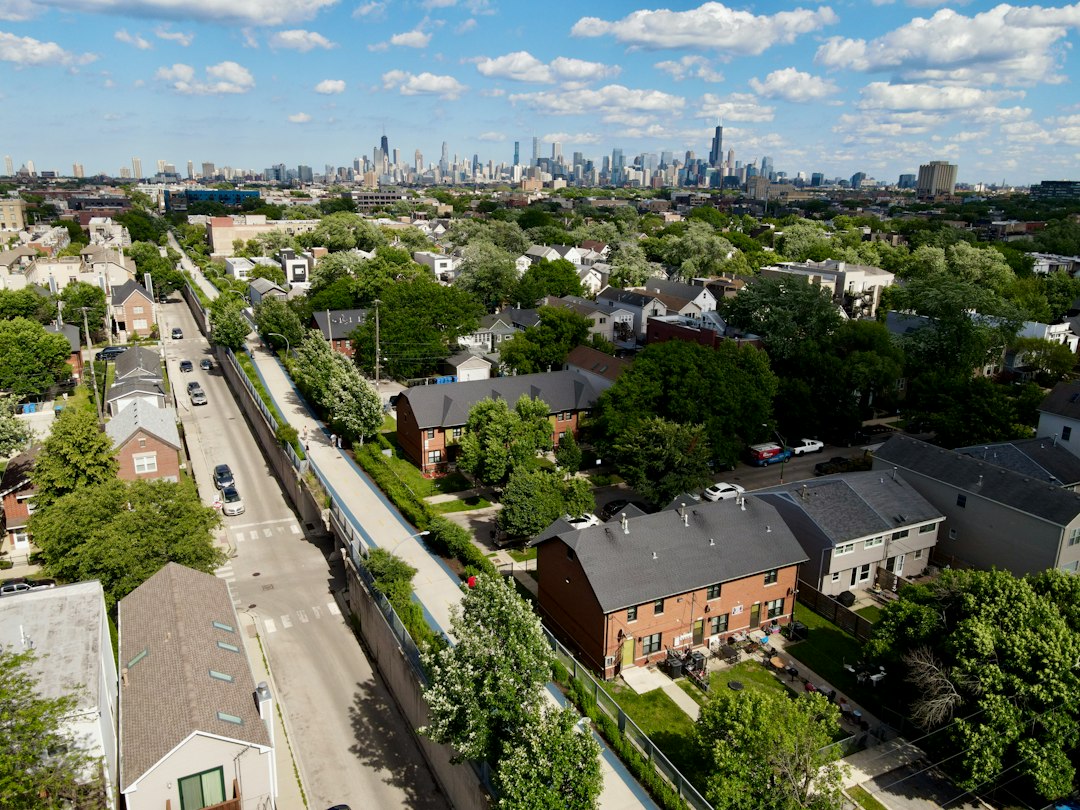
Ask an AI assistant to recommend a Chicago real estate broker and you rarely ask a general question. You ask something like: who helps first-time buyers in Logan Square? Or: I need a Polish-speaking broker to sell my mother’s house in Jefferson Park. Or: who knows how to sell a two-flat in Pilsen with tenants still living in it?
Those are good questions. They are also hard to answer from a typical broker profile, because most profiles are written to cover everything. Every neighborhood. Every kind of buyer and seller. “Residential, commercial, luxury, investment, first-time buyers, relocation, all of Chicagoland.”
We built the ChicagoRealEstate.ai broker directory for the client who wants a broker with a specific skill set. The way we did it is simple: we make every broker choose.
The 200-item menu problem
Think about a restaurant with a 200-item menu. Burgers, sushi, pasta, tacos, pad thai. Nothing on it is necessarily bad, but nothing on it tells you what the kitchen is actually good at. Now think about the place that does three things. You know exactly why you would go there.
Broker profiles have the same problem. When a profile lists 40 neighborhoods and 10 client types, it isn’t telling a client anything. And when an AI assistant reads that profile, it has nothing to match on. Every broker who lists everything looks the same as every other broker who lists everything.
A specialist is easy to describe, easy to find and easy to recommend. So that is what the directory asks for.
Three community areas, three client types
Every broker in the directory makes three choices:
- Up to 3 community areas. Not “Chicago” and not “the North Side.” Three of the city’s 77 official community areas, the ones they would most want a client to find them for.
- Up to 3 client types. Chosen from 13 situations, such as first-time buyers, move-up buyers, veterans using VA loans, downsizing and senior sellers, estate and probate sales, distressed sales, tenant-occupied sellers, divorce sales, relocation, investors, and renters and landlords.
- Every language they actually work in. There is no limit here. Speaking a client’s language is a real skill, and there is no reason to ration it.
Brokers can also list the property types they work with most, like condos, single-family homes or 2-4 flats.
The limits aren’t a suggestion. The sign-up form stops at three, and the site won’t save a fourth.
Why community areas, not neighborhood names
Chicago has hundreds of neighborhood names, and their edges are argued about at every block party. The City’s 77 community areas have fixed, official boundaries. Using them means a broker’s choice means the same thing to every reader, every map and every AI assistant. It also means every part of the city is on the list on equal terms, from Rogers Park to Hegewisch, and not just the neighborhoods with the most marketing behind them. Each community area links to its own page on this site, with its transit, parks and boundaries.
Why “sellers” isn’t one box
Almost every broker would tick “sellers.” That makes it useless as a filter. Selling an estate after a parent dies, selling a unit with a tenant who has two years left on a lease, and selling during a divorce are very different jobs. So we split sellers into the situations a client is actually in. A broker who picks three of those is telling you something real.
How this gets a client a better match
If you are looking for a broker, the directory lets you filter by exactly the things that matter:
- Community area, from the 77
- Client type, the situation you are in
- Language
- Property type
Because nobody can claim every area and every client type, a match on these filters means something. A broker who shows up for “Pilsen” and “tenant-occupied sellers” chose both of those out of a short list. That’s a far stronger signal than a broker who would have shown up for any search at all.
Why this works when an AI is doing the searching
AI assistants build answers from pages they can read, trust and quote. A broker profile here isn’t a paragraph of marketing copy the assistant has to interpret. Each choice is a separate, clearly labeled fact: these three community areas, these three client types, these languages, this license number. Those are the facts a specific question needs, written the way a machine reads best.
It works the same for a person. When you can see at a glance what a broker focuses on, you spend less time interviewing people who were never the right fit.
Licenses checked, not just typed
Every real estate broker in Illinois is licensed by the Illinois Department of Financial and Professional Regulation (IDFPR), and the state publishes its license records. Before a broker profile goes live here, we check the license number against those records. It has to be active, and the name on the license has to match the name on the profile. Profiles that haven’t been checked aren’t published. We recheck licenses regularly, and a profile whose license can’t be confirmed comes down.
That gives a reader two kinds of information on every profile, and we try to keep them clearly apart. The license is checked against state records. Everything else, including the community areas, client types and languages, is what the broker tells us about their own practice.
What the directory doesn’t do
It doesn’t rank brokers or score them. A broker’s three choices tell you where they focus, not how good they are at it. The directory is a better starting point for a short list, not a replacement for talking to a broker, asking about their recent work in your area, and choosing the person you trust.
For brokers
If you are a licensed Illinois broker, the pitch is simple: pick what you are best at. Choose the three community areas and three client situations you would most want a client to find you for, and list every language you work in. Your profile is reviewed and your license is checked before it goes live. Listing yourself as a specialist is a bet that clients searching for exactly what you do are worth more than clients searching for anyone.
Disclosure: ChicagoRealEstate.ai is run by Joe Bjorklund, a licensed Illinois real estate broker with Baird & Warner. To keep the directory neutral, he does not list himself in it, and the site does not favor, rank or refer clients to any broker.